Fair's Fair
How Do Fairs Fare?

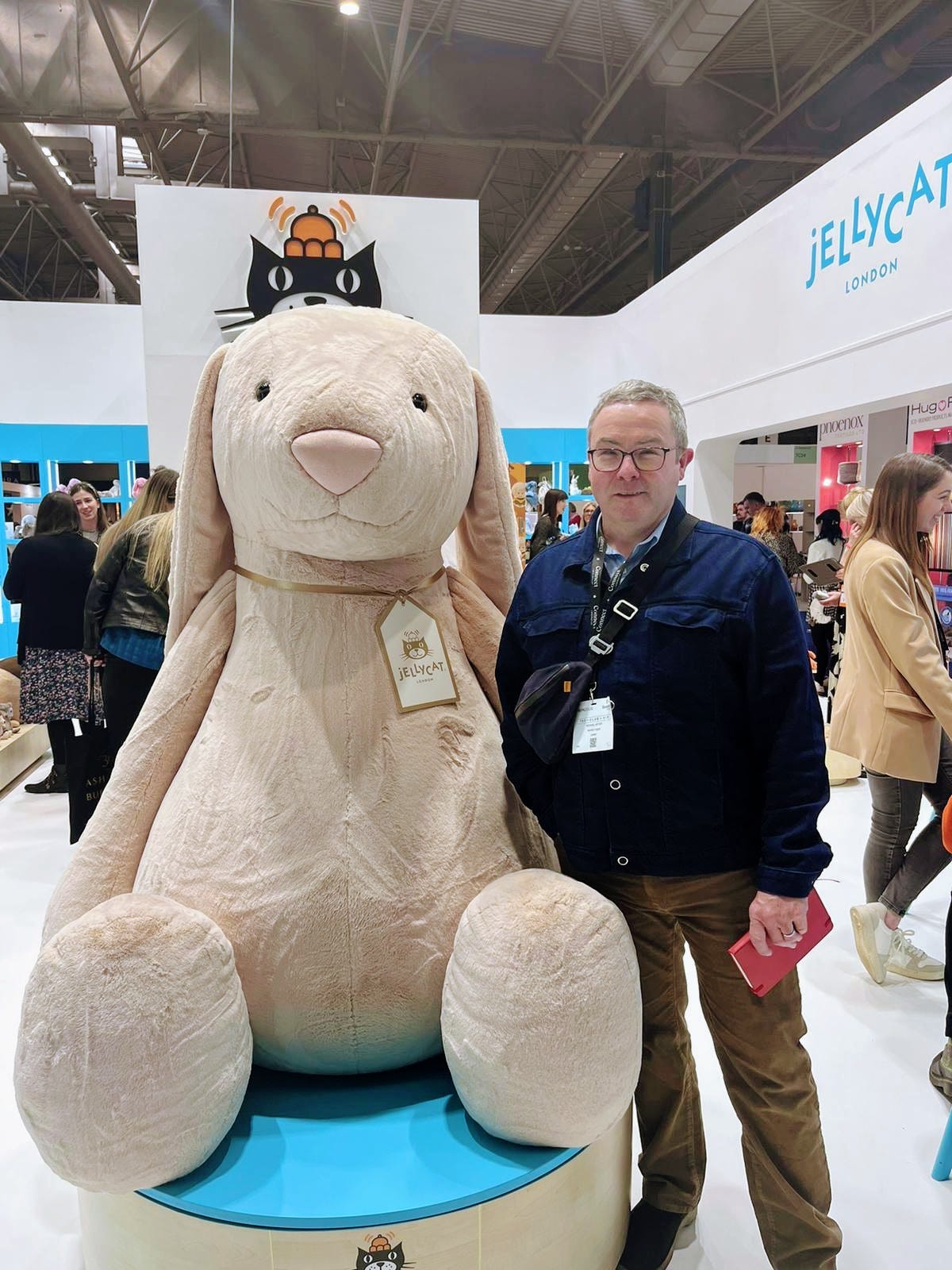
I am back at my desk after a couple of long and exhausting days at the Spring Fair. The trade show season for the home and gift sector is drawing to a close, and I have a few observations from my experiences and from conversations with exhibitors and other retailers that I want to share and give closer scrutiny.
The biggest takeaway was that trade fairs have an absolutely critical place in the industry that is both essential and desirable. For makers, designers, publishers and suppliers, there are few other ways to literally set out your stall in context of your competitors, and then attract buyers.
For store buyers and retailers, the comparative aspect cannot be underestimated. Seeing similar but different product collections within a few square metres of each other is a critical part of the buying process. Buyers need to compare apples with apples. They also need to compare apples with pomegranates. For everyone involved, seeing and touching the physical product that a customer will hold in their hands, and then making informed choices, is incomparable.
Websites, trade portals, online buying platforms, posted catalogues, an envelope with samples, and reps and agents with bags of stock or even pop up or permanent showrooms ultimately do not compete with a 'big fair'. The problem is that there are fewer and fewer big fairs. The remaining big fairs are no longer as big as they used be, and are emanating a late era Woolworths whiff of desperation. In most cases their critical mass has drifted away like tumbleweed blowing through their wide open aisles and partitioned halls.
The big fairs that are still soldiering on have innumerable and unenviable challenges that do not have any easy or palatable solutions. There are fewer exhibitors. There are also too many average - and an increasing number of below average - exhibitors. There are fewer retail store buyers. And too many. There are simultaneously too many and too few retailers to sell the product. The end user customers are concurrently habitualised to product ubiquity and also accept that there are limited choices. There are too many fairs and trade shows. There are too many organisers. There are too many disorganisers. It is too easy to criticise the organisers, but I just did. Again. There are too many niches. There are too many shows trying to be all things to all buyers.
It all costs too much - financially, economically, emotionally, calendrically and environmentally. They are gruelling, boring, arduous and uninspiring.
It is all completely invaluable - they are cost effective, emotional, stimulating, impressive, and (still) occasionally exhilarating, and well worth visiting.
The market has changed. The disconnect between what we see and do when we buy at a fair, and what our customers see and do when they shop is exacerbated by a growth in online specialists, and by micro businesses who only sell via TikTok or Instagram in a social media marketplace that has grown exponentially. And it is a an unregulated marketplace - products can come from unknown sources and from vendors of unknown provenance. You can kickstart your dream product, and find the requisite number of backers across the planet to make the most weird and (sometimes) wonderful things become real.
If you want an itsy bitsy teeny weeny yellow polka dot bikini, twenty four seconds online will bring you your specialist interest item within twenty four hours. The swimwear specialist that traded close to my business closed down five years ago, because the specialist customers were able to buy exactly the right kind of polka dots when they shopped online. If you need to whack something, you can buy a wide array of specialist mallets. Conversely, that ability to shop direct for your niche interest has reduced the wider choice in the general market - High Streeet hardware stores are one of my favourite places to waste time, browse for stuff I didn’t know I needed, and make a discretionary shop with real money, but they are a rare breed these days.
Similarly twenty years ago, there were numerous specialist pen shops across the UK. The internet has reduced their numbers to virtually one single big player online, who are selling all of the products across the range for every conceivable pen that you could wish to purchase. The pen market for a generalist business like Paper Tiger is no longer viable beyond a very small range of specific lines that we stock because of reasons. The remaining High Street pen specialists have to pick their specific niche within their niche in order to remain especially relevant for their special and specific customers. Also, as a species we have been using pens for about 3000 years, in recent years, less so.
Why? Well you can - and should - make the case that coding began in the 19th century (hello, Ada), but the great leap forward in technology in the latter part of the 20th century has given our customers the opportunity to spend real money on intangible products in an online universe. Gaming, online subscriptions, apps and digital media have taken consumer spend from the traditional home and gift markets. You don’t need a pen. You don’t need a shop. You don’t even need a website. The Store Gift Voucher has been replaced by a virtual token for the digital App Store. Do you know how much people spend on the Apple Store? I pay £8 (EIGHT WHOLE POUNDS) a month to Disney so that my kids can watch Marvel movies on repeat. Twenty years ago I would have spent that money on a DVD. These days? It disnae matter. And yet those same people who think it is well worth dropping their hard earned on their Netflix subscriptions wonder why Woolworths went bust. Those fancy goods weren't so fancy after all.
The other thing to say is that not all fairs suffer from these issues. The food fairs that I have attended in the past year were well worth visiting, and the buzz of innovation amongst makers and the excitement of buyers and retailers is palpable at these shows. Fancy foods, not fancy goods. Last September, the difference between the Speciality Food Fair at Olympia, followed by Top Drawer Autumn a week later was like night and day. Or - frankly - a nursery school and a nursing home.
Products matter. Products that customers are enthusiastic about matter. Yet all of the issues that the home and gift sector is facing are broadly true in the food industry. There are big retail players, big corporations, micro brands, farmers markets, local makers and High Street favourites, an overwhelming array of choices for consumers. You can't buy digital food (yet), but you can buy a subscription to Hello Fresh; the innovation is there. You can pay as much or as little as you need, or as much as you can afford for food and drink. The similarities exist, but the market is more dynamic and many of the customers - literally consumers - are more excited, more adventurous and more willing to take chances and spend when they make their choices.
What do we do? I don't have any easy answers. There are no easy answers.
I do think we have too many shows, and too many people trying to organise shows. I also think that we have too many small shows taking place in too many different places across too many time periods to make any kind of meaningful impact in the market. Too many exhibitors are making themselves available in too many places. The costs for the industry and those of us who work in it are too much (see above), and they are invariably passed down the line to customers. We make life expensive for ourselves and our businesses. There has to be greater efficiency in how the industry works to make this essential activity well worth retaining in the longer term. Something has to give, and it might be that someone has to give up.
For instance, I have worked at Paper Tiger for over twenty five years, and was absolutely astonished to find out recently that there is a Christmas products trade fair in Harrogate in January every year. I found this out when I was at a much reduced Top Drawer Spring at Olympia. I then found myself marvelling again that it is still justifiable when Spring Fair has space to accommodate such a show - and indeed used to have an entire hall dedicated to this particular niche in the industry. It was a thought that crossed my mind on several occasions as I greeted several suppliers - in a much reduced NEC - who I had seen less than a fortnight earlier in a similarly straitened Olympia.
I also think there are too many makers, designers and producers in the home and gift sector who are content to copy designs, trends, and ideas, and pass off second rate products. I understand that there is a need for different but similar products at differing price points. Goodness knows how many times I have seen the design cycle go through fads, fashions and iterations through the past twenty five years. I used to work for HMV. I know that there are only so many chords available to musicians so some derivation is inevitable, isn’t it, Noel? And when it comes to slavish copyists, I saw several egregious examples of design theft at Spring Fair. I honestly don't know how the culprits can live with themselves; I can only presume that they are able to roll with it.
And what about those customers, those consumers? Seven years ago Ikea's Head Of Sustainability came up with the concept of 'peak curtains'. I have subsequently walked the halls of Spring Fair with that phrase lodged in my mind, and I have often had a significant degree of sympathy with his point. As the show has slimmed down, some of the excessive consumption in the market has undoubtedly been filtered out.
Consumer goods need to be good for consumers.
As I write this, I am tired. I am foot sore and achy, sick of canteen standard food at Michelin restaurant prices. I wish I had shares in Hilton Hotels. I wish I didn't need to travel away from my family so much. I miss my dog. I wish there were fewer locations to visit, with more things to see. I wish there were better products in every sector of our market. I wish for more innovative design, with better applications and with more sustainability. At the end of the day, Ikea still finds it well worth their while to make and sell curtains to millions of satisfied customers.
Make great stuff, make it easier, make it well worthwhile, make consumers desire the products. Scratch that - make products that consumers desire.
As I write this, I am also grateful. I am grateful that these smaller shows have given me more time to engage with my suppliers in a more meaningful way, and talk to them about what they do, what we do, and what we can all do to make things better.
They are my inspiration - the makers, manufacturers and designers, and also the retailers of all sizes and sectors, and the supporting businesses and agencies within the sector that are innovative, that aim for quality, and that have vision and confidence in what they do, meeting and exceeding the needs of their customers all the way through the process. We need more of that, more often, and from more people within the industry.
And I think we need to have a conversation about it sooner rather than later, so that we are all working in a healthy industry that makes fantastic consumer goods that are well worth selling.
How do the fairs fare?
Fair’s fair - now let me know what you think.
In 2022, the first full post pandemic year of trading, if there was a trade show I went. I think it was more about getting out and seeing people if anything. But at the end of the year when I was planning my 2023 calendar, I decided drastically to cut back on the number of shows. Cost of attending and time are huge factors, as is the shop's budget. Top Drawer served me well and although there was the FOMO from not attending Spring Fair, from the social media feeds, I needn't have worried. I went on holiday instead.
I agree entirely about the similarity between product and when you've been curating a shop over 12 years, it's quite galling when someone can replicate your shop look over night. Especially when the ethos of the shop was to offer an offer in complete contrast to the homogeneity of the High Street. The problem is with all this similar product, even independent home/gift shops are all beginning to look alike - though I've yet to see another card/stationery/dog establishment; but it's only a matter of time!
One thing I'm thinking about is looking at trade shows overseas and seeing potential suppliers who are currently off the radar. Maybe next year it will be NY Now, Shoppe Object, Maison, Ambiente; or even a trip to Las Vegas Market ;)